

Mosquitoes Don’t Take a Break All Summer. Neither Should Your Prevention Plan.
A single mosquito complaint might seem minor. But for a hotel guest, restaurant customer, resident, or event attendee, it can shape their entire experience. In Florida, where mosquito activity can quickly increase when conditions are favorable, prevention isn’t just a pest control issue—it’s part of protecting your property’s reputation.
As a property manager, you know the property better than anyone. Where water collects after a storm, which irrigation zones run heavy, where the shade sits all afternoon. That knowledge is the foundation of effective mosquito prevention. The right pest control partner can build on that knowledge with the science, products, and scheduling that turn good property maintenance into consistent control.
Businesses that benefit most from this combined approach include:
- Outdoor dining restaurants
- Event venues
- Hospitality properties (hotels, resorts, vacation rentals)
- Senior living and healthcare facilities
- Any other commercial property with a meaningful outdoor space
Why does Florida’s Climate Create Ideal Conditions for Mosquito Activity?
Florida’s warm temperatures, frequent rainfall, and high humidity create ideal conditions for mosquito activity throughout much of the year. While populations often peak during the warmer months, even a brief period of rain can create new breeding opportunities across a commercial property.
Average temperatures above 70 degrees for most of the year, persistent humidity, and frequent rainfall create a breeding environment that never really stops.
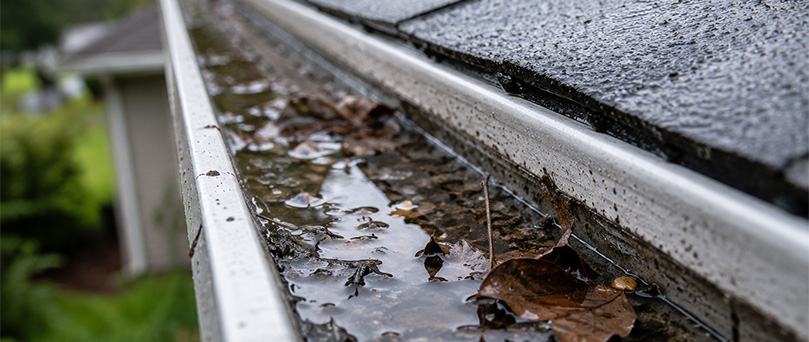
The mosquito lifecycle can generally complete in seven to ten days under Florida conditions. That means a brief rainstorm, a clogged gutter, a forgotten planter saucer, or a low spot in a parking lot can produce a new wave of mosquitoes in as little as a week. The first three stages of the mosquito lifecycle (egg, larva, pupa) are aquatic, which is why one of the most effective prevention steps on any property is eliminating standing water.
That biology is exactly why a proactive, prevention-first strategy outperforms a reactive one, and it’s the reason professionals in the industry have moved toward Integrated Pest Management.
Prevention Is the Foundation of Effective Mosquito Control
At Turner Pest Control, commercial mosquito programs are built around Integrated Pest Management (IPM), a prevention-first approach focused on identifying and correcting conditions that support mosquito activity before they become larger problems. Rather than relying solely on treatment after complaints arise, IPM combines inspection, monitoring, source reduction, and targeted applications to deliver more sustainable results. Where traditional pest control relies heavily on chemical application in response to outbreaks, IPM is knowledge-based and prevention-focused. It emphasizes modifying the conditions that introduce pests in the first place, and it limits the necessity of pesticide use.
A commercial mosquito program built on IPM includes:
Inspection
A licensed technician evaluates the property for breeding sites, harborage areas, and conducive conditions, and re-evaluates after rain events and seasonal changes.
Identification
Different mosquito species breed in different environments and may be active at different times of day. Identifying the species present helps determine the most effective monitoring and treatment approach for your property.
Monitoring
Regular monitoring helps identify changes in mosquito activity, verify that control measures are working, and detect new breeding areas before populations increase.
Sanitation and Exclusion
Source reduction (removing the conditions mosquitoes need) is the backbone of IPM. This is the area where your property management team has the most control. See the checklist below for a guide.
Treatment
Targeted treatments, including larvacides that interrupt mosquito development, insect growth regulators, and barrier treatments applied to shaded foliage where mosquitoes rest during the day, are used.
Documentation
Every service is recorded in detail: products, locations, findings, and property conditions that need correction. For businesses in regulated industries, this reporting becomes part of your compliance file.
Five Areas That Deserve Regular Inspection
The most effective mosquito programs combine professional treatment with prevention-minded property management. The checklist below highlights common conditions that can contribute to mosquito activity and provides opportunities to support long-term control across your property.
The steps below are the source-reduction half of an IPM program, and they are completely within your team’s control. Work through this list monthly during peak season and after major rain events.
Water and Drainage
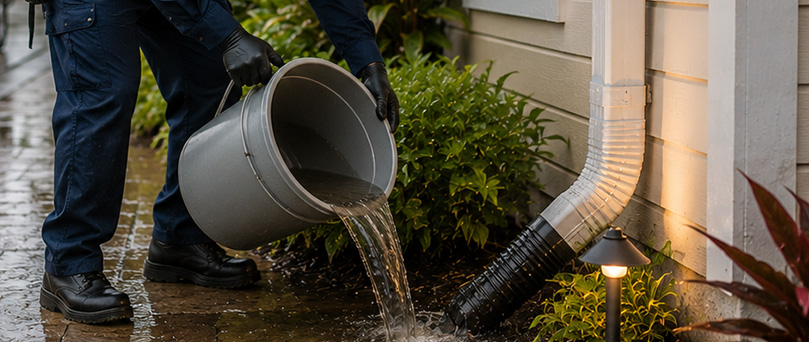
- Walk the property after a rainstorm and note any areas where water still stands 24 to 48 hours later. Regrade, fill, or report these issues for repair.
- Empty and refresh anything that holds water: planter saucers, trash can lids, equipment covers, tarps, and stored items.
- Clear roof gutters and downspouts of debris so water flows freely.
- Keep storm drains and catch basins on the property free of leaves and debris.
Irrigation Systems
- Inspect irrigation zones for broken heads, leaks, and overspray that creates chronically wet conditions.
- Adjust run times seasonally. Overwatering in Florida’s rainy season creates standing water that rain alone would not.
Retention Ponds
- Retention ponds are a fixture of many Florida commercial properties. When water movement becomes limited, vegetation becomes overgrown, or maintenance is deferred, they can create favorable conditions for mosquito development.
- Keep banks mowed and free of debris, confirm that outfall structures are flowing, and flag any vegetation-heavy areas to your pest control provider, who can recommend the best options for your situation.
HVAC and Mechanical Areas
- Check condensation lines and drip pans in all outdoor HVAC units. In Florida’s humidity, AC condensation is a steady water source that refills daily.
- Confirm condensation drains away from the building.
Landscaping and Structure
- Trim dense shrubbery and ground cover, especially in shaded areas near seating, entrances, and walkways. Daytime mosquito harborage thrives in thick, shaded vegetation.
- Remove leaf litter and yard debris.
- Schedule structural repairs that eliminate breeding and entry points: low spots in pavement, damaged screens on patios, and worn door sweeps and weather sealing.
Together, these property maintenance practices and professional mosquito treatments create a stronger, more effective prevention program.
Outdoor Comfort Influences Guest, Resident, and Employee Satisfaction
Mosquitoes can affect more than the enjoyment of outdoor spaces. For many businesses, they can influence customer satisfaction, employee comfort, resident experience, and even online reviews. A proactive mosquito program helps protect patios, courtyards, walking paths, outdoor events, and other spaces that contribute directly to the overall experience of your property.
Property Maintenance and Professional Treatment Work Best Together
Source reduction dramatically lowers mosquito prevalence, but no commercial property exists in a bubble. Reinfestation risk from neighboring properties, storm systems, and natural areas is constant in Florida. That is where the professional half of the partnership carries the load.
Larval Source Treatment
Licensed technicians treat standing water that cannot be eliminated, such as retention areas and drainage features, with larvicides that stop mosquitoes before they ever fly.
Resting Site and Barrier Treatment
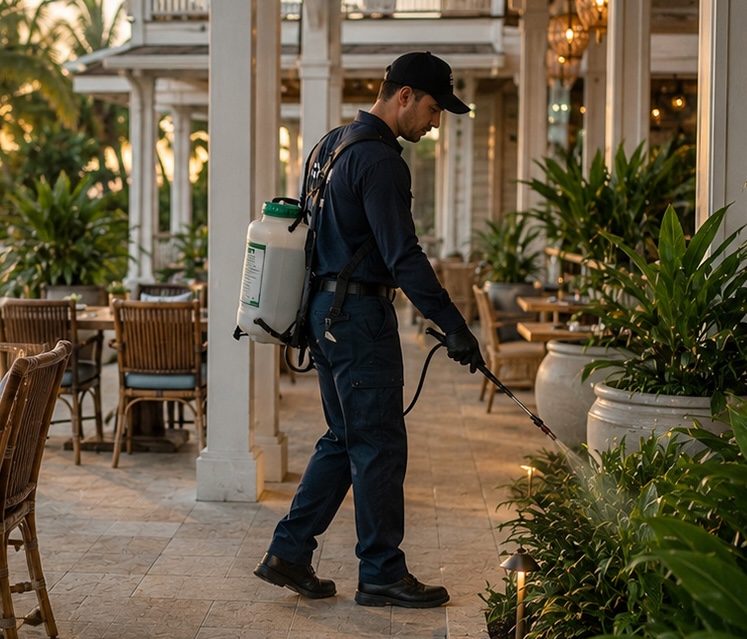
Professional mist application reaches the underside of foliage where mosquitoes shelter during the day, using equipment calibrated to produce the right droplet size for coverage and bonding. Depending on the property and treatment plan, products may also include insect growth regulators (IGRs) that help disrupt mosquito development and support longer-term control.
Scheduled Frequency Matched to Biology
Because the mosquito lifecycle restarts in roughly a week and treatments naturally weather over time, programs are scheduled at regular intervals, with adjustments during peak summer or after heavy rain. Consistent scheduling prevents population buildup instead of responding to it.
Eco and Organic Options
For properties that prefer botanical-based products, Turner offers GreenPro-certified service options, including an Eco-Mosquito program that treats foliage and breeding sites monthly using natural and botanical materials.
Inspection Reporting
After each visit, you receive documentation of what was found, what was treated, and any property conditions that need attention, with responsibility clearly assigned. Your maintenance team gets an actionable punch list and your compliance records stay complete.
Managing Mosquito Control Under One Pest Prevention Program Simplifies Operations
Many commercial properties already partner with a pest management provider for general pest, rodent, wildlife, or termite services. Incorporating mosquito control into an existing program often creates a more streamlined experience because:
Adding mosquito control to that existing program offers several practical advantages.
- Coordination is simpler. Your pest control visits are consolidated, and the technician is already familiar with your property.
- Comprehensive documentation is easier. If your business is in a regulated industry that requires you to maintain pest control records, unifying your services under one provider means one reporting system where you can easily find everything you need.
- Cost-per-treatment is lower when it’s part of an ongoing treatment plan rather than a series of one-time calls.
For properties that currently pay for standalone mosquito treatments or rely on occasional fogging, transitioning to a bundled system with Turner typically produces a better result at a comparable or lower annual cost.
Frequently Asked Questions
Why are mosquitoes worse after rain in Florida?
Mosquitoes require standing water to complete their lifecycle. After rainfall, water can collect in low spots, storm drains, landscaping features, gutters, and containers throughout a property. Under favorable conditions, mosquitoes can develop from egg to adult in as little as seven to ten days, making post-rain inspections one of the most important components of a prevention program.
What is IPM in mosquito control?
Integrated Pest Management is a prevention-focused approach that combines inspection, monitoring, sanitation, exclusion, and targeted treatment. It emphasizes eliminating the conditions mosquitoes need, which means less reliance on broad chemical applications and more durable results.
Is professional mosquito control safe for customers and employees?
Yes. Licensed pest control professionals use EPA-registered products applied according to label directions. Treatments are typically scheduled during off-hours, and treated areas are safe for normal activity once products have dried. Botanical-based eco options are also available.
What can my maintenance team do between treatments?
Quite a lot. Eliminating standing water, maintaining irrigation, keeping gutters clear, checking HVAC condensation lines, and trimming dense vegetation all reduce breeding pressure directly. Your technician’s inspection reports will flag specific conditions on your property to address.
Do Florida businesses need mosquito control year-round?
Florida’s climate has no true off-season for mosquitoes. Activity peaks in summer, but warm temperatures and standing water keep populations active well into fall and winter. Year-round programs provide the most consistent protection.
Can mosquito control be added to an existing commercial pest plan?
Yes. Turner Pest Control offers mosquito treatment as a bundled service alongside general pest, rodent, and other commercial programs, which simplifies scheduling and often reduces overall cost.
Protect Your Property with a Proactive Mosquito Program with Turner
Turner Pest Control has served commercial accounts across Florida for decades. Our licensed technicians understand the conditions, the biology, and the property types that make Florida mosquito control uniquely challenging, and our IPM-based programs are built to work alongside the property teams who know their sites best.
Whether you manage an outdoor dining restaurant in Jacksonville, an event venue in Orlando, a beachfront resort on the coast, or a multi-building healthcare campus anywhere in Florida, Turner can design a mosquito program that fits your property, your schedule, and your budget.
Start with the checklist above, then call Turner Pest Control to schedule a commercial mosquito control inspection today.