
You may have noticed more conversation lately about hantavirus, and with it, a fair amount of concern. While that concern isn’t unfounded, it’s also not a reason to panic.
We’ll cover what hantavirus actually is, what rodents you shouldn’t be worried about, and — most importantly — the practical prevention steps you can take to protect your home, your family, and your health.
What is Hantavirus and How Does It Spread?
Hantavirus is a rare but serious respiratory illness caused by contact with infected rodents, specifically through breathing in tiny particles from their urine, droppings, saliva, or nesting materials. It is not spread casually. You generally cannot contract it from another person in the U.S. (the one strain known to spread person-to-person, called the Andes variant, is found in South America and requires prolonged close contact with an infected individual).
The most common way people are exposed to the virus in the U.S. is by disturbing an area where infected rodents have nested or left droppings — sweeping, vacuuming, or cleaning without the proper precautions. Enclosed, poorly ventilated spaces like attics, crawlspaces, sheds, garages, and vacant buildings carry the highest risk.
Early symptoms can resemble the flu: fever, muscle aches, headaches, cough, and shortness of breath. If you have potentially been exposed to rodent activity and develop these symptoms within one to six weeks, seek medical care promptly and tell your provider about the possible exposure.
Which Rodents Should You Actually Be Concerned About?
This is where a lot of misinformation can circulate, and it’s important to be precise.
- Deer mice and certain field mice are the primary carriers of hantavirus in the U.S. The deer mouse is the most significant carrier.
- Typical urban mice (like the common house mouse) are not considered significant carriers and pose minimal hantavirus risk.
- Rats have been known to carry the virus in their fecal matter, urine, and saliva, although they are less commonly associated with hantavirus transmission than deer mice.
In Florida, the rodent species most commonly encountered in and around homes tend to be roof rats, Norway rats, and house mice. While roof rats and Norway rats carry their own health risks (including leptospirosis and salmonella), the hantavirus risk profile from these species is less than that of deer mice.
That said, any rodent activity in your home warrants your attention and professional evaluation.
Why Rodent Pressure is Increasing Across Florida
If you’re noticing increased rodent activity in your neighborhood in recent years, you’re not imagining it. Since the COVID-19 pandemic, Florida has been experiencing a significant and prolonged building boom, displacing wildlife and rodents from their natural habitats at an unprecedented rate. As land is cleared and developed, rodents migrate. Often, this migration is into existing homes, attics, and other nearby structures.
This is a trend we’re seeing play out in real time across our service area. More construction activity means more rodent pressure on residential and commercial properties. And it’s one of the reasons proactive pest control is so important.
What To Do If You Suspect Rodent Activity
Homeowners should avoid sweeping, vacuuming, dry-cleaning, or using leaf blowers on suspected rodent droppings, nesting materials, or contaminated areas. Agitated dried materials can aerosolize particles and significantly increase exposure risk.
If you suspect or know you have rodents in your home, here’s what we recommend:
- Call a pest control company for a professional inspection. A trained technician can assess your attic, crawlspace, and exterior entry points, determine the species involved, and recommend the right course of action.
- Ventilate before entering any enclosed space with suspected activity. Open windows and doors and let the area air out at least 30 minutes before entering, and make sure to wear the proper PPE, such as gloves and an N95 or N100 mask, when inside the space.
- Seek medical attention promptly if you develop flu-like symptoms within six weeks of potential exposure. Tell your doctor about possible rodent contact.
How Turner Pest Control Helps Protect Your Home
Rodent prevention and remediation is an area where Turner has deep, established expertise. Our wildlife team has been helping Florida homeowners and businesses address rodent issues long before the current conversation around hantavirus began. Here’s what we offer:
Thorough Inspections
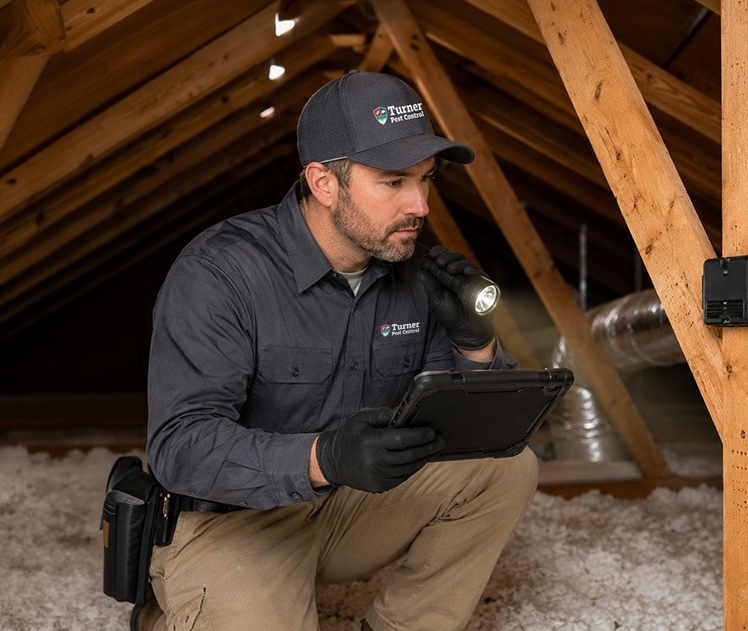
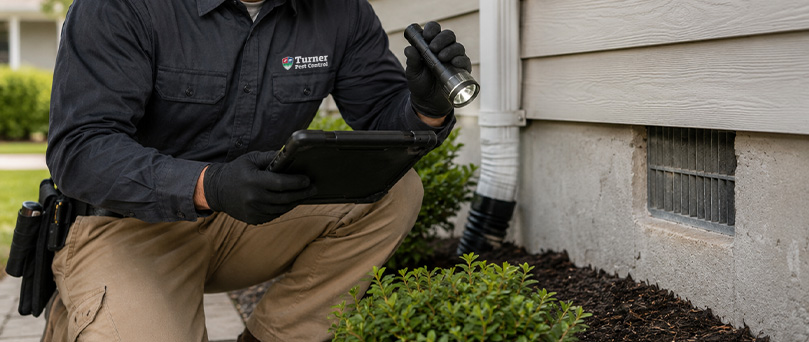
Our inspections cover both the exterior of your home and interior spaces like attics and crawlspaces, which are exactly the areas where rodent activity most commonly goes undetected. We identify entry points, signs of infestation, and potential risk factors specific to your home.
Every Turner inspection also includes practical, property-specific sanitation and prevention recommendations. Keeping rodents away is always the best protection, and our experts can show you exactly what your home’s vulnerabilities are and how to protect yourself.
Wildlife Exclusion Services
Wildlife exclusion is one of the most effective long-term solutions to a rodent problem. Turner’s wildlife team will seal the entry points rodents use to access your home, including gaps, cracks, vents, and rooflines, so new rodents can’t get in after existing ones are removed.
Wildlife Remediation
For homes where rodents, bats, raccoons, birds, or other wildlife have already contaminated the attic, Turner offers remediation services. This includes disinfecting contaminated areas, removing your compromised insulation, and replacing it with new insulation — restoring your attic to a clean, safe condition.
SMART Rodent Monitoring
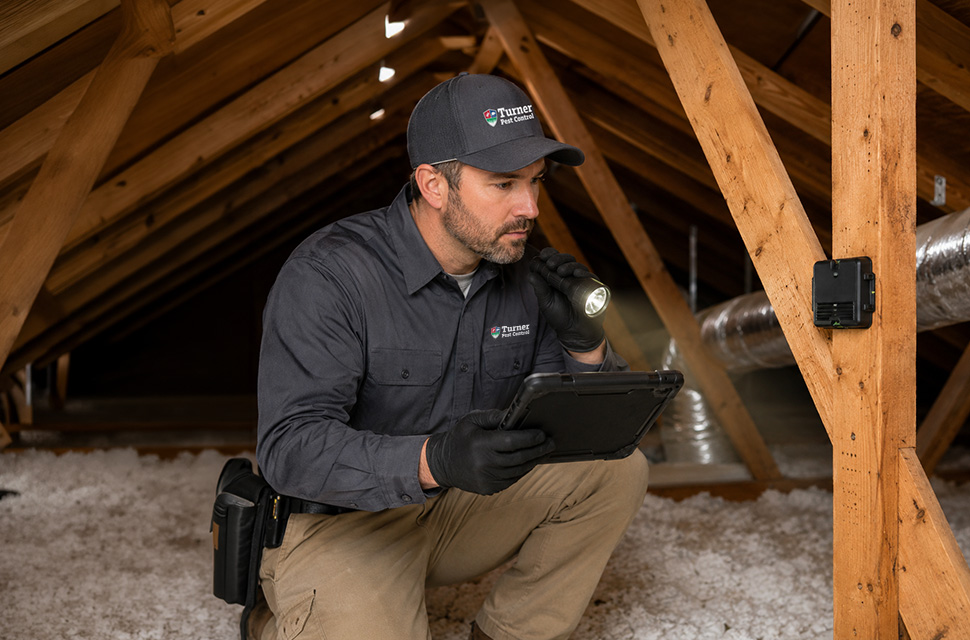
Turner is proud to offer SMART rodent monitoring technology. This is a connected, digital system that detects and reports rodent activity in real time, without the wait between service visits. For properties with ongoing rodent pressure or high-risk environments, SMART monitoring provides a proactive layer of protection that traditional trapping alone can’t match.
Protect Your Home With SMART
Protecting your home from rodents doesn’t require fear. It requires the right tools and the right partner. Turner’s SMART rodent monitoring system works continuously in the background, catching activity early so you can address it before it becomes a health risk. Combined with professional wildlife exclusion, it’s proactive protection that allows you to stop worrying and start feeling confident about your home.