
Table of Contents
- Why Storm Season Creates Pest Problems in Florida
- Why Integrated Pest Management (IPM) Matters Before Hurricane Season
- How Florida Storms Increase Pest Activity
- Facility Maintenance Between Service Visits Matters
- Storm Season Facility Readiness Checklist
- Storm Season Is Pest Season—Prepare Before the Next Storm
- Frequently Asked Questions
Why Storm Season Creates Pest Problems in Florida
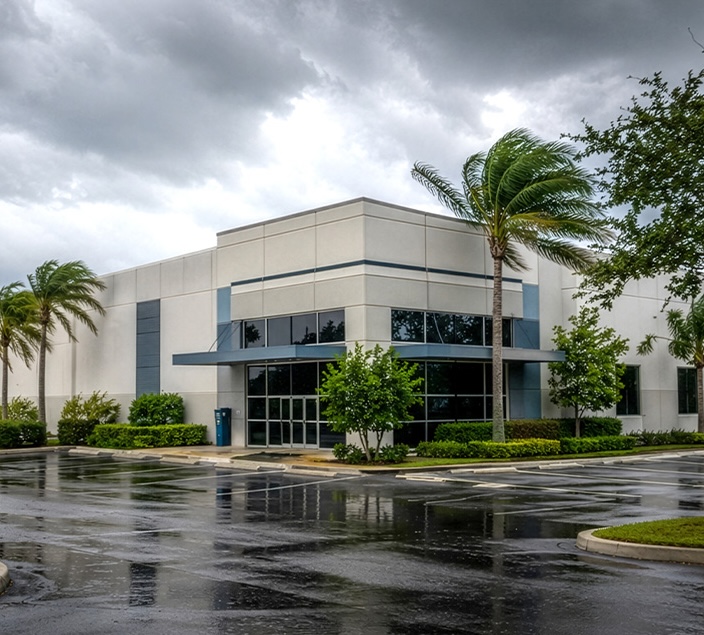
For Florida businesses, storm season and pest season go hand in hand. As tropical storms and hurricanes bring prolonged rainfall, flooding and saturated soil, many pests lose their natural nesting sites. Colonies that normally remain outdoors begin searching for higher, drier ground—and commercial buildings often provide exactly what they’re looking for.
Restaurants, commercial kitchens, offices, warehouses, healthcare facilities and food processing operations offer:
- Reliable food sources
- Moisture and water access
- Climate-controlled shelter
- Utility rooms and equipment voids
- Storage areas with minimal disturbance
Without proactive prevention, a storm that lasts only a few hours can create pest pressures that linger for weeks.
Why Integrated Pest Management (IPM) Matters Before Hurricane Season
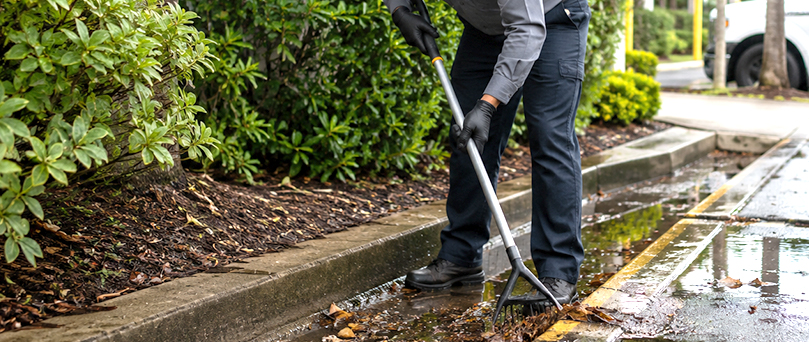
The most effective commercial pest management programs begin long before a storm appears on the weather map. Integrated Pest Management (IPM) focuses on identifying and correcting the conditions that attract pests rather than simply reacting after an infestation develops.
Turner Pest Control’s commercial IPM approach helps facilities:
- Reduce pest harborage before storms arrive
- Identify structural vulnerabilities
- Improve sanitation practices
- Eliminate excess moisture
- Monitor pest activity year-round
- Respond quickly when conditions change
Experienced commercial technicians understand how Florida’s climate changes pest behavior before and after major storms. After a hurricane or tropical storm, facilities with established IPM programs typically recover faster because potential entry points, sanitation procedures and monitoring systems are already in place.
How Florida Storms Increase Pest Activity
Ants
Heavy rainfall frequently floods ant colonies, forcing species such as ghost ants, fire ants and carpenter ants to relocate. Instead of remaining outdoors, ants often migrate into:
- Commercial kitchens
- Employee break rooms
- Food storage areas
- Offices
- Mechanical rooms
Even small moisture issues or food residue can quickly support new colonies after a storm.
Cockroaches
Cockroach activity often increases dramatically after heavy rainfall. Flooded sewer systems, saturated mulch, standing water and increased humidity force roaches indoors where moisture remains available.
Common hiding places include:
- Utility rooms
- Floor drains
- Kitchens
- Dishwashing areas
- Storage rooms
- Electrical equipment spaces
Flies
Fly populations often surge after storms because standing water, overflowing dumpsters and wet organic material create ideal breeding conditions.
Facilities commonly notice increased fly activity around:
- Loading docks
- Waste collection areas
- Floor drains
- Exterior doors
- Food preparation areas
Prompt sanitation and moisture control are critical after significant rainfall.
Rodents
Storm flooding can also displace rats and mice from burrows, storm drains and exterior nesting sites. Even temporary gaps created during storm preparation or cleanup can become entry points.
Rodents often seek shelter inside:
- Warehouses
- Food storage rooms
- Mechanical spaces
- Ceiling voids
- Loading dock areas
Facility Maintenance Between Service Visits Matters
Turner partners with facility managers to ensure professional commercial pest control is most effective when paired with consistent facility maintenance. Managers can significantly reduce pest pressure and support compliance by focusing on:
Sanitation
- Clean spills immediately.
- Remove food debris daily.
- Empty trash frequently.
- Maintain grease traps.
- Keep employee break rooms clean.
Exclusion
- Seal cracks and utility penetrations.
- Maintain door sweeps.
- Repair damaged weather stripping.
- Ensure loading dock doors close completely.
- Replace damaged screens.
Moisture Management
- Repair roof leaks quickly.
- Eliminate standing water.
- Maintain gutters and drainage.
- Inspect floor drains regularly.
- Address condensation around equipment.
Harborage Reduction
- Reduce clutter.
- Store inventory off the floor.
- Trim vegetation away from buildings.
- Organize exterior storage.
- Keep dumpster areas clean.
These practices help prevent pest populations from becoming established between scheduled service visits and help reduce operational risk.
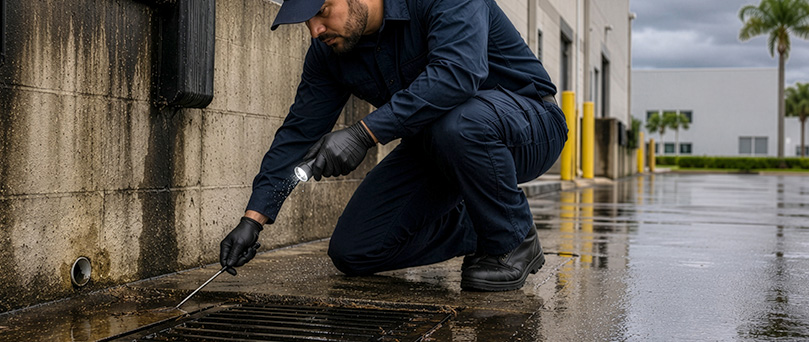
Storm Season Facility Readiness Checklist
Use this self-audit before hurricane season and after major storms.
Exterior Conditions
☐ Storm drains and gutters are clear
☐ No standing water around the building
☐ Landscaping trimmed away from walls
☐ Dumpster and waste areas clean
☐ Exterior doors, seals and loading docks in good condition
Moisture & Water Intrusion
☐ Roof leaks repaired
☐ Utility rooms remain dry
☐ Floor drains functioning properly
☐ Condensation corrected
Sanitation & Storage
☐ Food stored properly
☐ Trash removed regularly
☐ Food debris cleaned promptly
☐ Storage areas organized
☐ Grease traps maintained
Pest & Rodent Entry Points
☐ Cracks and gaps sealed
☐ Door sweeps fit tightly
☐ Windows and screens maintained
☐ Loading dock doors close completely
Signs to Watch For After Heavy Rain
Monitor your facility closely for:
⚠ Increased ant activity near entrances or break rooms
⚠ Cockroaches in kitchens, lights, storage rooms or utility spaces
⚠ Fly activity around drains, dumpsters or loading docks
⚠ Rodent droppings, gnaw marks or scratching sounds
⚠ Standing water remaining longer than 48 hours
Early detection allows pest issues to be corrected before they grow into larger operational concerns.
Storm Season Is Pest Season—Prepare Before the Next Storm
A proactive commercial pest management program helps protect your facility before severe weather arrives by combining routine inspections, exclusion, sanitation improvements and ongoing monitoring to reduce pest pressure year-round.
Turner Pest Control partners with Florida businesses year-round to identify risks before they become costly pest problems. Through routine inspections, proactive IPM strategies and ongoing monitoring, we help facilities stay prepared before, during and after storm season.
Schedule a Complimentary Facility Assessment
Talk to a Commercial Pest Specialist
Frequently Asked Questions
What pests and rodent risks should Florida restaurant and commercial kitchen managers prepare for during hurricane season?
Florida facilities commonly experience increased activity from ghost ants, fire ants, carpenter ants, cockroaches, flies and rodents after heavy rainfall. Flooding and saturated soil displace pests, driving them indoors in search of food, water and shelter.
How can commercial kitchens reduce ant, cockroach, rodent and fly activity after a hurricane or major storm?
Focus on sanitation, moisture control, sealing entry points, cleaning drains, maintaining waste areas and scheduling a professional commercial pest inspection. Integrated Pest Management (IPM) helps identify vulnerabilities before infestations develop.
Why does heavy rain increase pest activity?
Heavy rainfall floods nests, burrows and outdoor harborage areas. As pests seek dry shelter, commercial buildings become attractive environments with food, water and climate-controlled conditions.
What is Integrated Pest Management (IPM)?
Integrated Pest Management is a proactive strategy that combines inspections, exclusion, sanitation, facility maintenance, monitoring and targeted treatments to prevent pest problems while reducing long-term risk.
How often should commercial facilities receive pest inspections during hurricane season?
Facilities should maintain regularly scheduled commercial pest control services throughout the year, with additional inspections recommended before and after significant storms to identify new vulnerabilities caused by wind, flooding or moisture.
Why is storm preparation important for pest prevention?
Preparing before severe weather in Florida helps eliminate conditions that attract pests, reduces the likelihood of infestations, supports food safety compliance and allows facilities to recover more quickly after storms.