

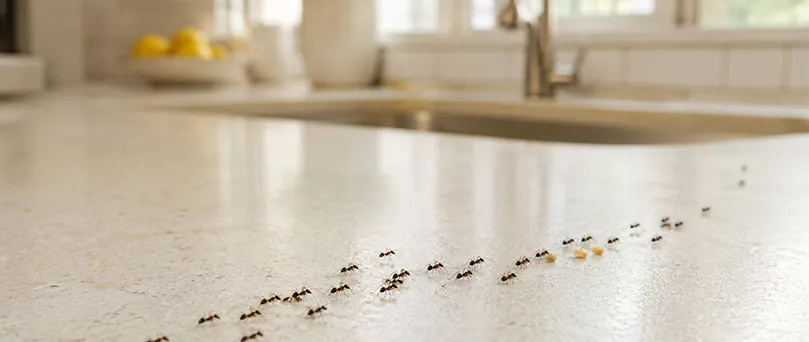
You clean the area, remove the visible ants, and assume the problem is handled.
A few days later, they are back. This time, they may be near a food preparation area, inside a break room, around stored inventory, or somewhere a customer can see them.
For a business, ants are more than a nuisance. They can raise sanitation and health concerns, contaminate products, disrupt operations, and damage customers’ and employees’ confidence in your facility. Here is why the problem often persists: The ants you see may represent only a small fraction of a much larger colony.
Why Ant Problems Persist in Commercial Facilities
Commercial properties give ants numerous opportunities to find food, water, and shelter. Larger buildings also contain more entry points, hidden spaces, and activity patterns that can make the source difficult to identify. Several factors may be contributing to recurring ant activity.
The Colony May Still Be Active
The ants visible inside your facility are generally worker ants searching for resources. The queen and most of the colony may be hidden beneath the building, inside a wall void, under exterior landscaping, or elsewhere on the property.
Removing the visible ants may temporarily reduce activity, but it does not necessarily affect the colony. As long as the colony remains active, additional workers can continue entering the facility.
Your Facility Is Providing Food or Water
Commercial environments can offer ants a nearly endless supply of resources. Crumbs beneath equipment, residue around drains, spills behind shelving, and food left in employee areas may be enough to attract them.
Even facilities that do not prepare or serve food can have vulnerable areas, including:
- Employee break rooms and kitchens
- Vending and coffee stations
- Trash and recycling areas
- Receiving and storage areas
- Restrooms and utility rooms
- Floor drains and plumbing penetrations
- Landscaping and irrigation systems
Ants Have Multiple Ways Into the Building
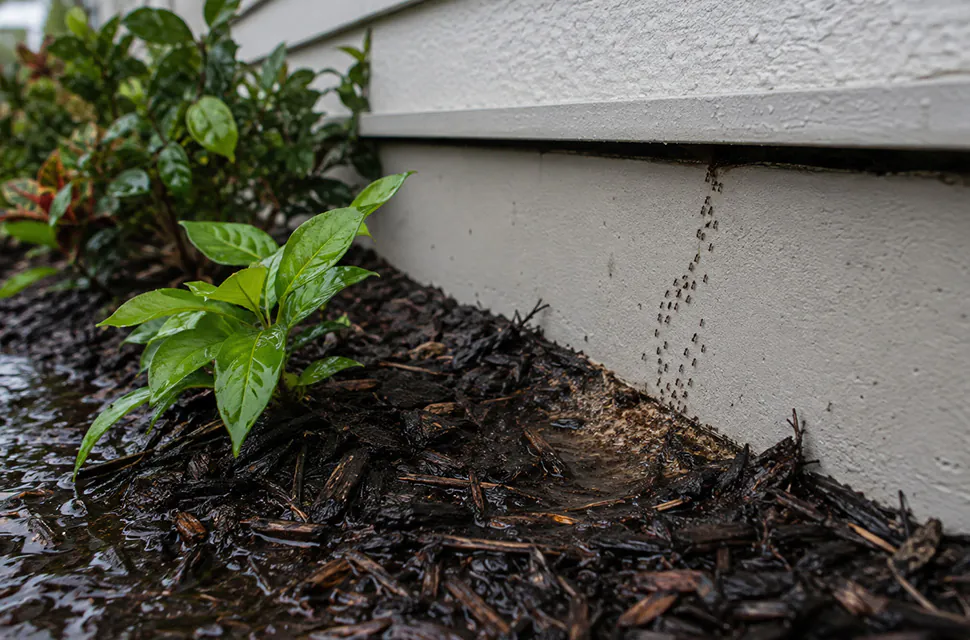
Commercial facilities often have frequent deliveries, employee entrances, loading docks, and utility penetrations that create opportunities for pests to enter. Ants can travel through small cracks around doors, windows, pipes, wiring, and building joints. Exterior landscaping, mulch, and tree branches may provide additional pathways to the structure.
Because ants leave pheromone trails for other members of the colony to follow, one successful route can quickly become an established path into the building.

Treatments Are Addressing the Activity, Not the Source
It may be tempting for an employee to spray the ants as soon as they appear. While this can kill some ants on contact, it rarely eliminates the underlying infestation.
In some cases, applying the wrong product can scatter certain ant colonies and cause them to establish additional nesting sites. Sprays may also interfere with baiting strategies by killing or repelling worker ants before they can carry the bait back to the colony.
Different ant species have different nesting habits, food preferences, and treatment requirements. Without proper identification, a well-intended response may provide only temporary relief or make the problem harder to control.
Operational Conditions Are Reintroducing the Problem
Recurring ant activity may be connected to everyday business operations. Deliveries, incoming inventory, employee food, waste handling, and movement between connected spaces can all introduce or spread pest activity. A treatment may reduce the immediate problem, but ants can return if the conditions that attracted them remain unchanged.
Florida’s Climate Keeps Ants Active
Florida’s heat, humidity, and rainfall allow ants to remain active throughout much of the year. Heavy rain can flood outdoor nesting areas and push colonies into buildings. Hot or dry conditions may drive ants indoors in search of water. For commercial facilities, this means ant activity can change quickly based on weather, surrounding construction, landscaping, and activity on neighboring properties.
Commercial Ant Prevention: What Your Team Can Do
Your employees play an important role in pest prevention. A few consistent facility practices can reduce the conditions that attract ants and help your pest management professional identify activity earlier.
Strengthen Sanitation Practices
- Clean spills and food residue promptly, especially beneath equipment, behind appliances, and around shelving
- Store food and ingredients in sealed containers
- Empty trash regularly and keep dumpsters, compactors, and recycling containers clean and properly positioned away from the building whenever possible
- If rooftops are accessible, regularly remove debris buildup, such as leaves and tree limbs; this creates harborage areas for insects, including ants and cockroaches
Address Moisture Problems
- Repair leaking faucets, pipes, and irrigation components
- Clean drains regularly
- Investigate areas with standing water, excess condensation, or persistent dampness
Moisture problems can indicate both a pest-conducive condition and a larger maintenance issue that requires attention.
Inspect Deliveries and Storage Areas
- Check incoming boxes, pallets, and supplies for signs of pest activity
- Avoid storing materials directly on the floor or tightly against walls, which can create hidden travel routes
- Remove excess cardboard and unnecessary clutter that can provide protected spaces for pests
Reduce Exterior Attraction
- Trim trees and shrubs away from the building
- Avoid excessive mulch or leaf litter around the foundation
- Correct irrigation systems that keep the perimeter continually damp
- Keep exterior trash areas clean and ensure doors, loading docks, and utility openings are properly sealed
Establish a Clear Reporting Process
Employees should know how and where to report pest sightings. Encourage them to record the location, time, and conditions rather than immediately applying a store-bought spray. Early reporting gives your pest management provider valuable information that can help identify patterns and trace the activity to its source.
When Is It Time to Call Turner?
A recurring ant problem should not be allowed to become a customer-facing incident, sanitation concern, or operational disruption. It is time to involve Turner when:
- Ant activity returns after cleaning or treatment
- Ants are appearing in food preparation, storage, or customer areas
- Multiple areas of the facility are affected
- Ants appear to be entering through walls, electrical outlets, or plumbing
- Your team cannot identify the entry point or nesting location
- Pest activity could affect an inspection, audit, or customer requirement
Effective commercial ant management begins with proper identification and a thorough understanding of the facility. Turner’s commercial pest professionals inspect the interior and exterior of your property to determine the ant species, identify areas of activity, and uncover the conditions that may be supporting the infestation. We then develop a targeted approach based on your facility, industry, and operational requirements.
Protect Your Facility Before Ants Become a Bigger Problem
If ants continue to reappear, the issue may be more complex than the activity visible on the surface.
Turner Pest Control can help identify the source, strengthen your pest prevention program, and help protect the people, products, operations, and reputation connected to your facility.
Frequently Asked Questions
Why do ants keep coming back at my business?
Recurring ants often mean the colony is still active or the conditions attracting them remain in place. Food residue, moisture, entry points, landscaping, and everyday operations can all contribute to continued activity.
What attracts ants to commercial buildings?
Ants are generally looking for food, water, and shelter. Break rooms, food preparation areas, drains, trash storage, leaking plumbing, vending stations, and damp landscaping can all provide resources that attract ants.
Can spraying ants at work make the problem worse?
Sprays may kill the ants you can see without addressing the rest of the colony. Depending on the species and the product used, spraying may also interfere with baiting or alter nesting behavior. Proper ant identification helps determine the appropriate treatment approach.
What should employees do when they see ants?
Employees should report where and when they noticed the activity and avoid applying unapproved pest control products. Recording sightings can help a commercial pest professional identify patterns, entry points, and possible nesting areas.
Can ants become a sanitation or compliance concern for a business?
Depending on the type of facility and industry requirements, visible pest activity can raise sanitation concerns or create issues during inspections, audits, or customer reviews. Addressing activity early can help reduce operational and reputational risk.
How can businesses help prevent ants from coming back?
Consistent sanitation, moisture control, delivery inspections, proper storage, exterior maintenance, and clear pest-reporting procedures can all help reduce conditions that attract ants. Ongoing professional monitoring can also help identify activity before it becomes a larger issue.