Wildlife Exclusion for Florida Commercial Properties: Fall Prep Guide
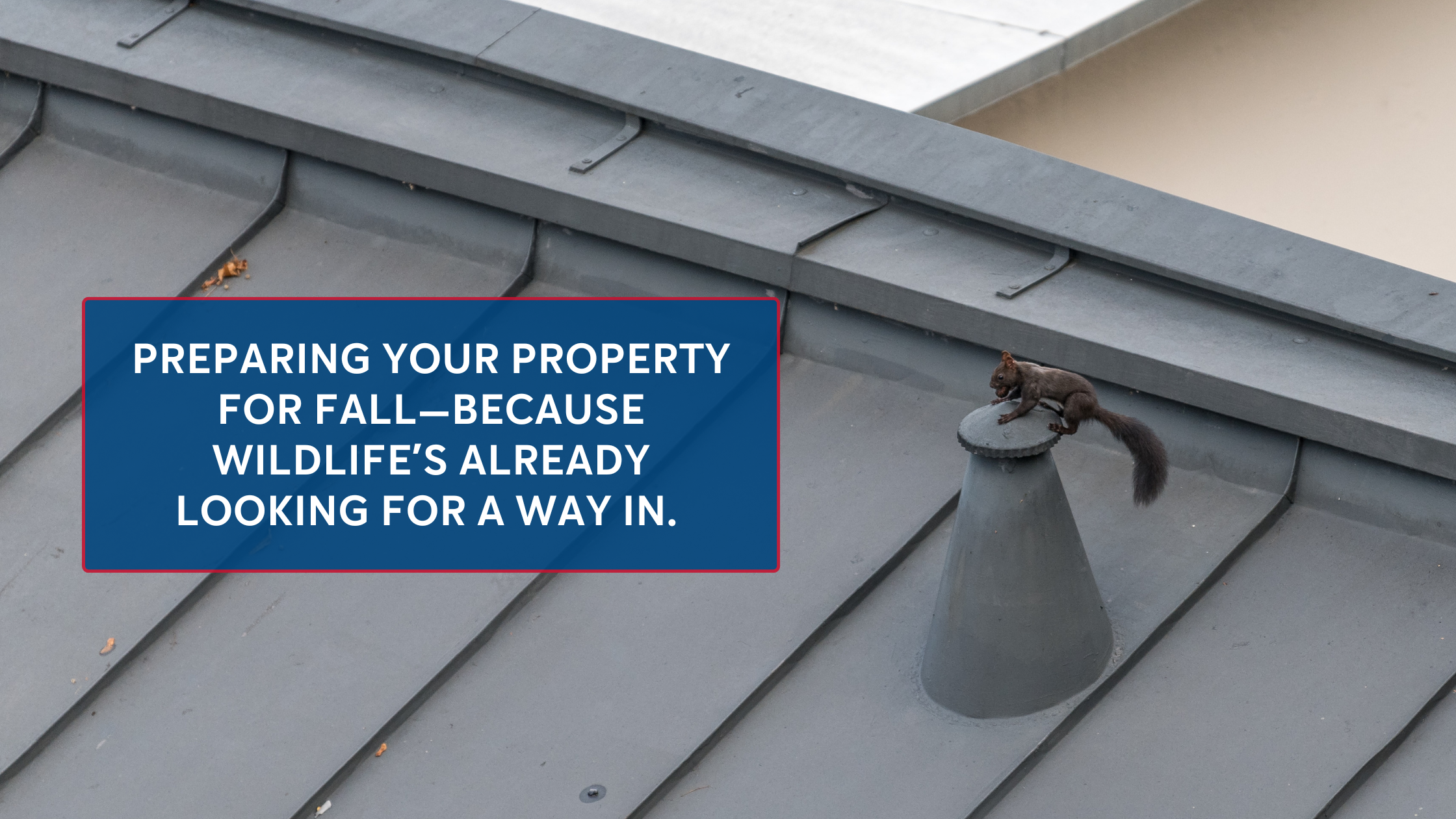
As temperatures cool and daylight hours shorten, wildlife across Florida begin searching for warm, sheltered places to nest and live through the winter. Wildlife exclusion in Florida is critical for commercial buildings that offer easy access points for pests seeking warmth and shelter during the fall and winter. Unfortunately, many commercial properties provide exactly what they’re looking for: quiet attics, rooflines, signage, and storage areas.
From raccoons and squirrels to birds and bats, these animals can cause far more than a nuisance—they can create serious structural, safety, and sanitation problems if they gain access to your building. The good news? With a proactive wildlife exclusion approach, these risks can be prevented long before they start.
Why Wildlife Activity Increases in Fall
Fall marks a seasonal change in wildlife behavior. As food sources become scarce and temperatures dip, many species seek warmth and protection inside manmade structures.
For commercial properties, that means increased pressure on:
-
Rooflines and soffits where raccoons or squirrels can pry open entry points.
-
Vents and ductwork offering easy access into ceilings or attics.
-
Signage and awnings that provide nesting space for birds.
-
Crawlspaces and storage areas that stay warm and undisturbed.
Even small openings—no larger than a golf ball—can allow animals to squeeze inside and establish nests. Once they do, exclusion becomes more complex and costly.
Florida Wildlife Species That Invade Commercial Buildings
Florida’s mild climate means wildlife activity continues nearly year-round, but certain species become especially active in fall:
-
Raccoons – Clever and strong, they can lift shingles, push open soffits, and enter through roof vents. Once inside, they can destroy insulation and wiring.
-
Squirrels – Known for chewing through fascia boards and electrical lines, squirrels often seek attics or voids to nest.
-
Birds – Pigeons, sparrows, and starlings can nest in signage, ledges, or roof structures, leaving droppings that damage surfaces and create health risks.
-
Bats – Found in rooflines and attic crevices, bats are a protected species in Florida. Professional exclusion is required and permitted only outside maternity season.
Each species brings unique challenges—but the solution begins with the same principle: sealing and securing your structure before they move in.
The Real Costs of Delaying Wildlife Exclusion
Wildlife intrusions are more than inconvenient—they’re costly and potentially hazardous:
-
Property Damage: Chewed wires, damaged insulation, and contaminated ceiling tiles can lead to electrical risks or mold growth.
-
Health Concerns: Urine and droppings can spread diseases such as histoplasmosis or leptospirosis.
-
Operational Disruption: Noises, odors, or visible droppings can negatively impact employees, tenants, or customers.
-
Reputation: In multi-tenant buildings, a single sighting can create lasting perceptions about maintenance and sanitation standards.
In short, what starts as a scratching sound behind a wall can quickly escalate into a facility-wide issue.
Proactive Wildlife Prevention: Wildlife Exclusion Checklist for Florida Property Managers
Effective wildlife management begins with prevention, not reaction. Property managers and maintenance teams can reduce risk by integrating exclusion into regular seasonal prep:
✅ Inspect rooflines, soffits, and vents for loose coverings or gaps.
✅ Trim trees and vegetation at least 6–8 feet away from the building to limit climbing access.
✅ Secure dumpsters and waste areas with tight-fitting lids and proper sanitation.
✅ Seal entry points around utility lines, piping, and HVAC penetrations.
✅ Schedule a professional exclusion inspection before wildlife seek shelter for the season.
A short inspection today can prevent weeks of repair, cleanup, and tenant disruption later.
Turner’s Expert Wildlife Exclusion Services
Turner Pest Control’s commercial wildlife program focuses on responsible and comprehensive exclusion—protecting both your property and the surrounding environment.
Our experts begin with a full inspection to identify potential entry points, nesting evidence, and environmental attractants. From there, we:
-
Safely remove any active wildlife presence.
-
Sanitize contaminated areas to eliminate odors and pathogens.
-
Seal all potential entry points with durable materials.
-
Provide long-term exclusion recommendations tailored to your facility type.
For multi-tenant properties, office complexes, and retail centers, Turner also offers integrated service plans that combine exclusion with ongoing pest management—ensuring your building remains secure through every season.
Schedule Your Wildlife Inspection Before Winter Hits
Don’t wait until you hear scratching above the ceiling tiles or find damage in your signage. Fall is the ideal time to secure your property before wildlife seeks winter shelter.
Schedule a professional wildlife inspection today and give your tenants, employees, and customers peace of mind all season long.