

Table of Contents
- Why Nuisance Wildlife Are a Serious Problem
- Common Pest Birds in Florida Businesses
- Which Birds and Wildlife Are Protected?
- The Hidden Costs of Birds and Bats for Businesses
- Why DIY Bird and Bat Control Usually Doesn’t Work
- What to Expect from a Commercial Bird Control and Bat Removal Program
- Commercial Bird & Bat Prevention Checklist
- Frequently Asked Questions
Why Nuisance Wildlife Are a Serious Problem for Florida Businesses
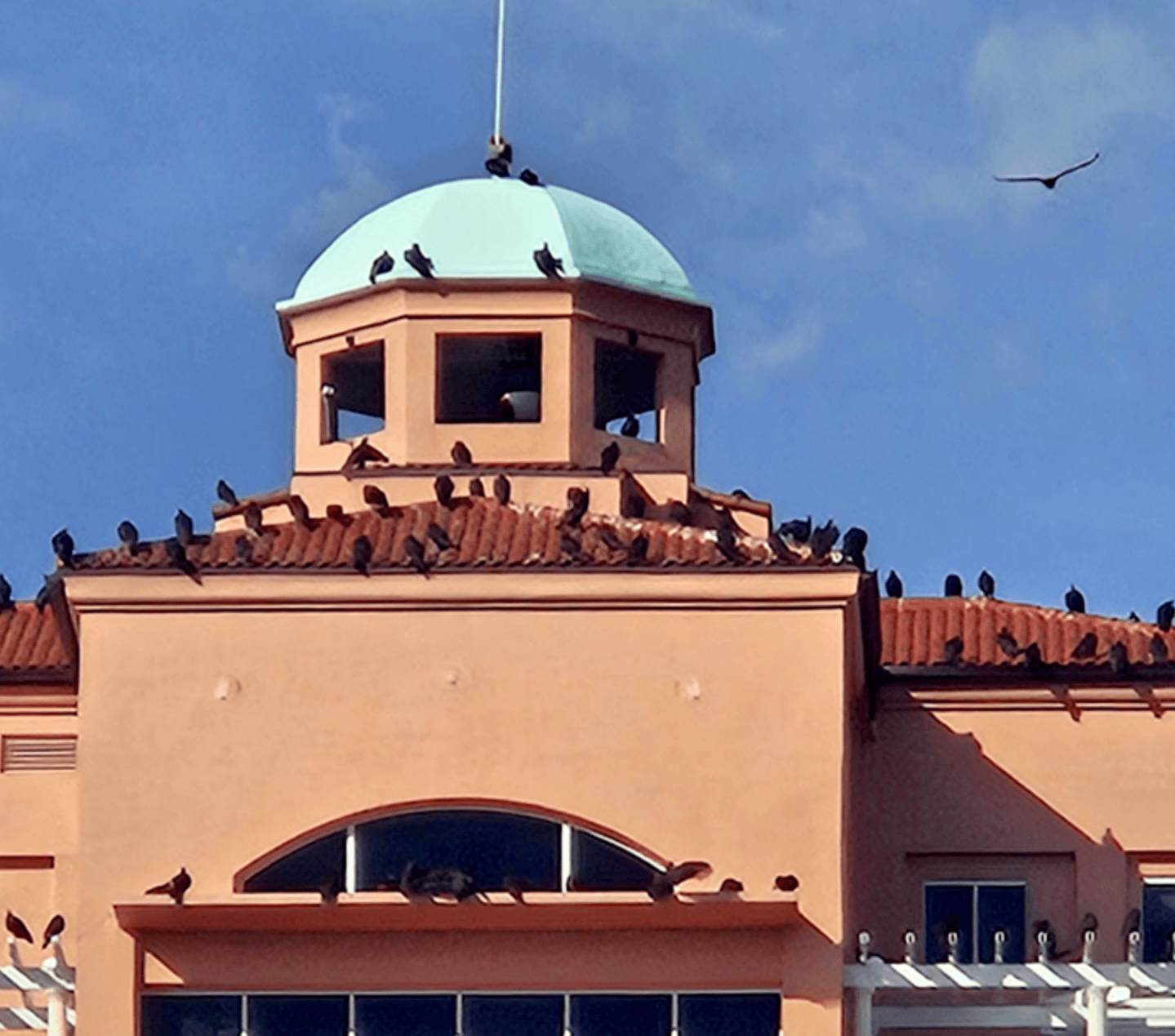
Birds may seem harmless, but for commercial properties they can quickly become a costly operational issue.
Throughout Florida, businesses such as restaurants, warehouses, manufacturing facilities, retail centers, healthcare facilities, hotels and distribution centers frequently deal with persistent bird activity.
The most common problem areas include:
- Restaurant patios and outdoor dining spaces
- Dumpster enclosures
- Warehouse rafters
- Loading docks
- Retail storefront awnings
- Parking garages
- Rooftop HVAC equipment
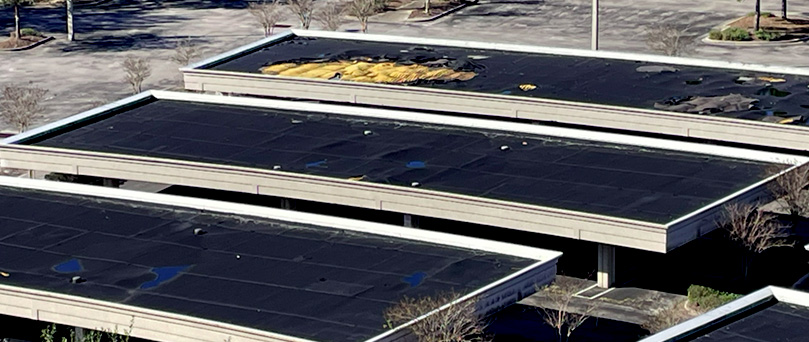
- Solar panel installations
- Signage and architectural ledges
Once birds establish a roosting or nesting location, they often return day after day unless the underlying conditions are addressed.
Common Pest Birds in Florida Businesses
Not every bird can—or should—be treated the same way.
Correct species identification is one of the most important parts of any commercial bird control program because both treatment options and legal protections vary. Many Florida businesses also discover bat colonies in the same elevated areas where nuisance birds gather.
| Species | Common Commercial Locations | Primary Concern | Pigeons | Roofs, parking garages, ledges | Droppings, property damage | Gulls | Restaurants, marinas, coastal businesses | Food contamination, aggressive behavior | European Starlings | Warehouses, manufacturing facilities | Large flocks, contamination | Bats | Rooflines, attics, wall voids | Guano, diseases, parasites |
Which Birds and Wildlife Are Protected?
Some nuisance species—such as pigeons, European starlings and house sparrows—can often be managed differently than native birds protected by the Migratory Bird Treaty Act. Florida bats are also protected under state regulations, making professional species identification essential before exclusion begins.
The Hidden Costs of Birds and Bats for Businesses
Birds and bat problems extend far beyond appearance.
Health Risks
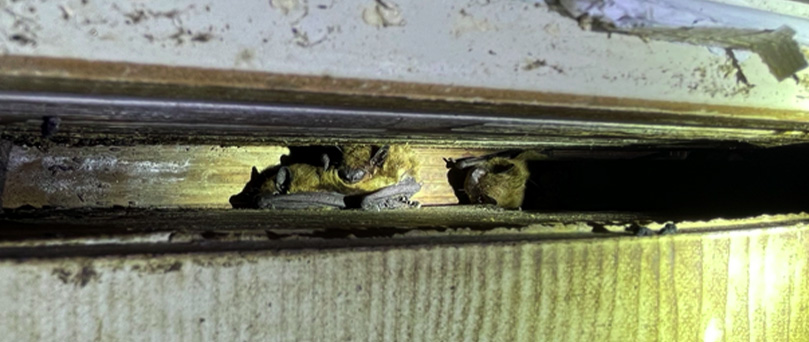
Their droppings can harbor bacteria, fungi, parasites and other pathogens that may pose health concerns for employees and customers. Accumulated droppings can create slippery walking surfaces and contribute to poor sanitation.
Property Damage
Bird and bat activity can interrupt daily operations, increase maintenance costs, and create avoidable disruptions for employees and customers. Large bat colonies also create persistent odors that may affect employees, customers and tenants while attracting additional insects and scavenging pests.
Their droppings are acidic and can deteriorate:
- Roofing materials
- Paint
- Concrete
- Metal
- Building facades
- Wood framing
- HVAC systems
Nesting materials frequently clog:
- Roof drains
- Gutters
- Ventilation systems
Water intrusion caused by blocked drainage can result in expensive repairs.
Food Safety & Health-Code Concerns
For restaurants, grocery stores and food processing facilities, bird activity can create serious compliance issues.
Bird droppings around:
- Outdoor dining
- Loading docks
- Food storage
- Dumpster areas
Birds can increase contamination risks and negatively affect inspections.
Bat Health Concerns
Bat colonies can create additional health risks for your people and your property.
Accumulated bat guano can support fungal spores that cause histoplasmosis, a respiratory disease. Bats are also the leading source of human rabies exposure in the United States, although actual transmission is rare. In addition, bat colonies may introduce secondary pests such as bat bugs, mites and ticks into commercial buildings.
Why DIY Bird and Bat Control Usually Doesn’t Work
Many businesses owners try temporary fixes such as:
- Plastic owls
- Noise makers
- Reflective tape
- Homemade repellents
Unfortunately, birds and bats quickly become accustomed to these methods when they aren’t part of a comprehensive management strategy.
How Professional Commercial Bird and Bat Control Works
Whether the issue involves pigeons on a parking garage or bats inside a warehouse roofline, successful wildlife management begins with identifying the species, understanding why they’re present and implementing long-term exclusion strategies.
- Inspection & species identification
- Exclusion (netting, tension wire, bat exclusion devices)
- Habitat modification & sanitation
- Wildlife removal and trapping when appropriate
- Digital monitoring technology
What to Expect from a Commercial Bird Control and Bat Removal Program
Florida businesses face unique bird pressures because of the state’s warm climate, coastal environment and year-round outdoor activity. Turner Pest Control develops customized commercial bird control solutions designed to:
- Protect employees and customers
- Reduce health risks
- Preserve buildings and equipment
- Support regulatory compliance
- Minimize operational disruptions
- Deliver long-term prevention through effective bird exclusion services and ongoing monitoring
Our goal isn’t just to remove nuisance birds and bats—it’s to help keep your business stay cleaner, safer and protected from future problems through long-term prevention.
Talk to a Commercial Pest Specialist
Commercial Bird & Bat Prevention Checklist
Download Your Florida Business Owner’s Nuisance Wildlife Prevention Guide
Frequently Asked Questions
Are the birds on my property protected, and what does that mean for my control options?
It depends on the species. Many native birds are protected under federal law, while non-native birds such as pigeons, European starlings and house sparrows generally have more management options. A professional inspection helps identify the species and ensures any bird control plan complies with applicable regulations.
Why do birds keep coming back after I’ve tried to get rid of them?
Birds return when food, water, shelter or nesting locations remain available. Temporary deterrents alone rarely solve the problem. Long-term success typically requires a combination of bird exclusion services, sanitation, habitat modification and ongoing monitoring.
Can I remove a bird nest from my building, or do I have to leave it?
That depends on the bird species and whether the nest is active. Many native birds and their active nests are protected by law. Removing a protected nest without proper authorization may violate federal regulations. Species identification is the first step before taking action.
How do you get birds out of a warehouse or high-ceiling space?
Professional bird control specialists use a combination of exclusion techniques, species-specific deterrents, netting systems and strategic removal methods designed for large commercial facilities while minimizing disruption to operations.
How do restaurants keep birds away from outdoor dining and dumpster areas?
Restaurants benefit from improved sanitation, covered waste containers, prompt cleanup of food debris, exclusion systems, and professional deterrent strategies that discourage birds from landing and nesting near customer areas.
What’s the best way to keep pigeons out of a parking garage?
Long-term pigeon control for businesses often combines bird netting, tension wire systems, exclusion barriers, sanitation and ongoing monitoring to prevent pigeons from re-establishing roosting sites.
How do I keep birds off rooftop HVAC and solar equipment?
Bird exclusion systems, screening, netting and targeted deterrents help prevent birds from nesting around rooftop equipment while protecting HVAC efficiency and solar panel performance.
Can bats be removed from my commercial building year-round?
Not always. In Florida, bats are protected during maternity season (April – August), when young bats cannot yet fly. Humane exclusion work typically begins in August using one-way devices that allow bats to leave safely before entry points are permanently sealed. A professional wildlife inspection can determine the appropriate timing and legal options for your property.