| Bottom line: When it comes to wood-destroying insects in Florida, the stakes are too high to guess. Carpenter ants and termites may look similar, behave similarly, and even show up at the same time of year, but treating the wrong pest means the real problem keeps growing quietly behind your walls. A licensed Turner Pest Control technician knows the difference and can build a treatment plan for the specific pest, your specific home, and Florida’s specific climate.
Florida’s year-round pest activity means there’s no off-season, and no safe window to wait and see. Don’t let a case of mistaken identity turn into a major repair bill. Turner Pest Control is here to help! |
If you’ve spotted small, wood-loving insects in or around your Florida home, you’re probably asking yourself the same question thousands of homeowners ask every year: Is that a termite?
Carpenter ants and termites have similarities that cause a lot of confusion. Even though both are wood-destroying insects that can cause serious structural damage, they are very different creatures that require different solutions. And knowing which one you’re dealing with could save you thousands of dollars in repairs.
Why Do Homeowners Confuse Carpenter Ants and Termites?
It’s easy to see why! Both insects are small, can be found near wood, and tend to show up in greater numbers during Florida’s warm, humid months. To make matters even more confusing, both species produce winged “swarmers” at certain times of the year. The flying insects can look remarkably similar at first glance.
Though confusion is common, the consequences of misidentifying these pests can be costly. Treatment for each of these pests looks very different. Meaning, treatment for the wrong insect can mean the infestation you’re actually dealing with goes unchecked.
What Does a Carpenter Ant Look Like Compared to a Termite?
Identifying these insects comes down to three key features: body shape, wings, and behaviors.
Body Shape
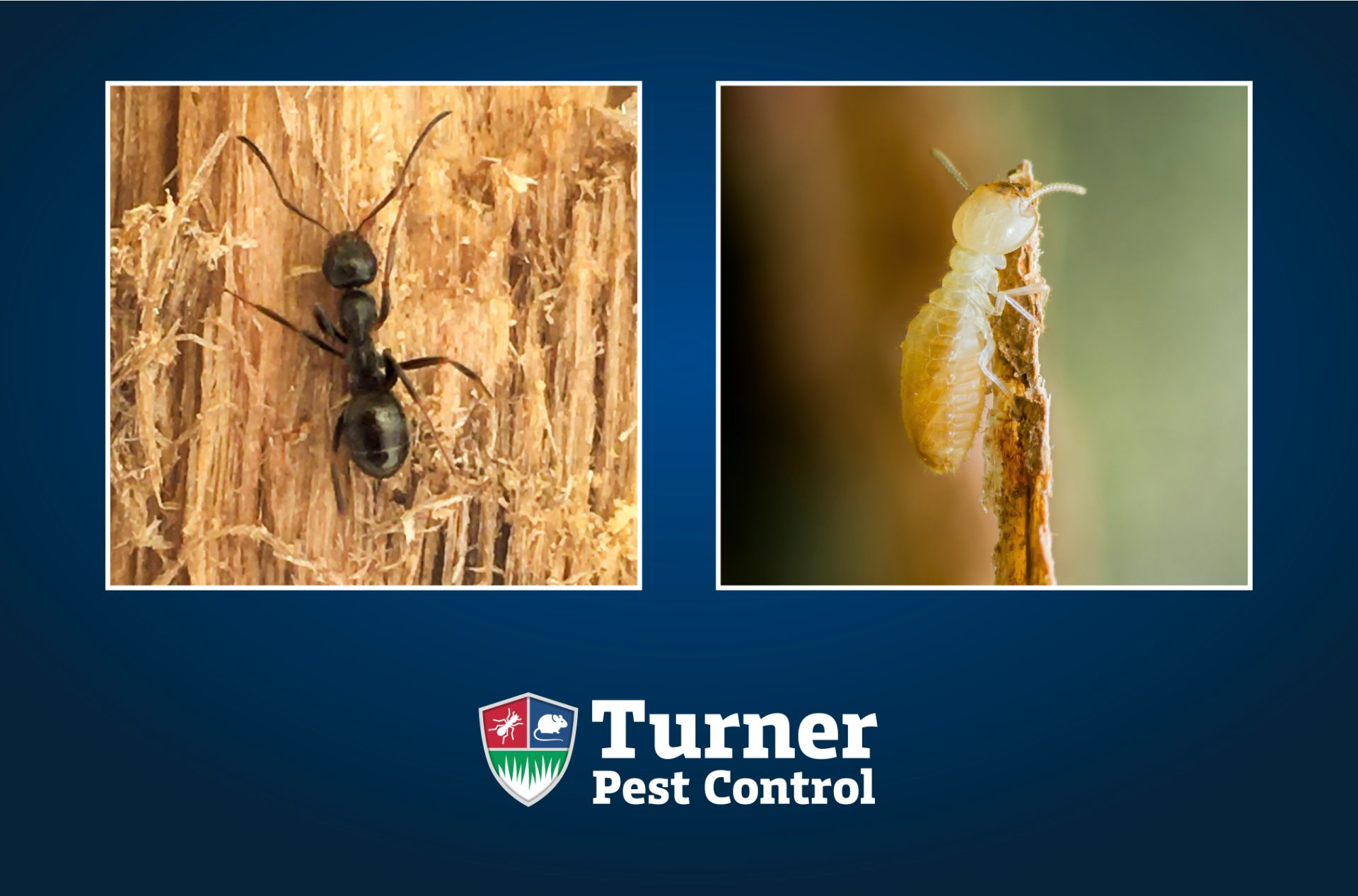
Carpenter ant bodies have clearly defined segments. They have a narrow, pinched waist — similar to what you’d expect from any ant. They range from ¼ to ½ inch in length and are typically black, red, or a combination of both.
By contrast, termites have a thick, straight waist with no pinching between segments. Their bodies appear almost rectangular. Worker termites are pale and much smaller, often only ⅛ inch long. Swarmers (reproductive termites) are darker but still lack the defined waist of an ant.
Wings
This is where many homeowners get confused. Both species produce winged swarmers, but there are clear differences to consider.
Carpenter ant swarmers have two pairs of wings. The front wings are noticeably longer than the hind wings, but both pairs are clear with visible veining.
Termite swarmers also have two pairs of wings, but the pairs are equal in length and often longer than their bodies. Termites frequently shed their wings after swarming, so finding discarded wings near windowsills and doorways is a strong indicator of termite activity.
Quick tip: if you see wings of two different sizes, think ants. If the wings are all the same length (or you’re finding shed wings), think termites.
Behavior and Damage Pattern
Carpenter ants do not eat wood. They excavate wood to build galleries and nesting tunnels. Their damage tends to look smooth and clean, as if the wood was sanded. You may find small piles of sawdust-like debris near entry points.
Termites actually consume wood as a food source. Subterranean termites build mud tubes to travel between their colonies and the wood they’re feeding on. Damaged wood is often hollowed out, with a honeycomb-like structure inside.
While termites don’t leave debris as openly as carpenter ants, frass can still be found near kick-out holes or in areas of active damage. Termite frass tends to look like tiny, oval-shaped pellets and may be found in small piles near baseboards, window frames, or damaged wood.
Do Carpenter Ants and Termites Require Different Treatments?
Absolutely! And this is why correct pest identification matters so much.
Treating carpenter ants involves locating and eliminating the colony, addressing the moisture problems that attracted them in the first place, and sealing entry points. Carpenter ants are drawn to damp or decaying wood, so moisture control is a critical component of treatment.
Treating termites requires a specialized approach, such as liquid termiticide barrier treatments, termite bait station systems, or even fumigation. These are not DIY-friendly solutions. Misapplication not only fails to solve the problem, but can even spread the infestation to new areas of your property as the pests scatter.
Frequently Asked Questions
How does Florida’s climate contribute to ant and termite activity?
Florida’s heat, humidity, and frequent rainfall create near-perfect conditions for both termites and carpenter ants year-round. Moisture softens wood, making it easier for carpenter ants to excavate and nest, while subterranean termites rely on damp soil and high humidity to survive and expand their colonies.
Unlike homeowners in cooler climates who get a seasonal break from pest pressure, Florida residents face active termite and ant populations year-round. If you notice swarming insects after a warm rain event, that’s often a sign that an established colony is nearby and actively looking to grow.
What are the most common termites found in Florida?
Florida is home to several termite species, but the most common and destructive are:
- Eastern Subterranean Termites are the most widespread species in the U.S. and Florida, living in underground colonies and entering homes through the soil
- Formosan Subterranean Termites are an invasive and particularly aggressive species capable of causing severe structural damage in a short period of time
- Drywood Termites live entirely within the wood they consume and do not require soil contact, making them harder to detect
Can I treat carpenter ants or termites myself?
Over-the-counter products may suppress visible activity temporarily, but they rarely eliminate the source colony. Termites in particular require professional-grade treatments to fully resolve an infestation. In many cases, DIY attempts delay proper treatment and allow damage to worsen. A licensed pest control professional is always the recommended approach for any wood-destroying insect.
How do I know if I have an active ant or termite infestation?
Signs of an active infestation include: swarmer insects (especially after rain), mud tubes on foundation walls or interior surfaces, hollow-sounding wood when tapped, frass near baseboards or window frames, and blistering or sagging paint on wood surfaces. If you observe any of these signs, schedule a professional inspection as soon as possible.
Schedule a Professional Pest Inspection with Turner Pest Control
Wood-destroying insects shouldn’t be a guessing game. Our team at Turner Pest Control has the experience and tools to accurately identify the problem and deliver the right solution.
Our licensed technicians serve homeowners across Florida with targeted treatment plans for carpenter ants, termites, and all wood-destroying organisms. Schedule your inspection today! Because when it comes to protecting your home, early detection is always the right call.
Turner Pest Control serves homeowners and businesses throughout Florida. Our licensed pest management professionals specialize in termite prevention, carpenter ant control, and comprehensive pest management plans tailored to Florida’s unique climate.